This isn't a lecture about "prompt engineering" as performance art. It's closer to editing—stripping the noise until the scene has one clear job per panel. AI storyboarding tools, including ours at AI Storyboard, can only build from what you hand them. If the handoff is muddy, the boards wobble. If it's disciplined, the boards start to feel like a sequence instead of a collage.
The "Describe Everything" Trap
There's a reflex I recognize in myself: if one sentence is good, five sentences must be five times as good. Strangely enough, the opposite tends to be true. Long prompts often smuggle contradictions—two lighting setups, three emotional tones, a costume detail that only matters in shot four but shows up in shot one because you mentioned it early.
The model tries to honor all of it. You get a frame that is technically "accurate" to the word soup and narratively useless—like a photograph where every object is equally sharp, so nothing guides the eye.
I'll trade a short, viciously specific paragraph for a wandering epic any day. One location. One time of day. One action that matters right now. You can always branch into the next panel once the first one holds.
When Your Shot List Fights Itself
Here's a failure mode I see in pitches and TikTok scripts alike: the writer asks for a slow, wide establishing shot and an intimate close-up in the same breath, as if the camera could be in two places because the prose said so. Language can jump; lenses can't—not in a single frame.
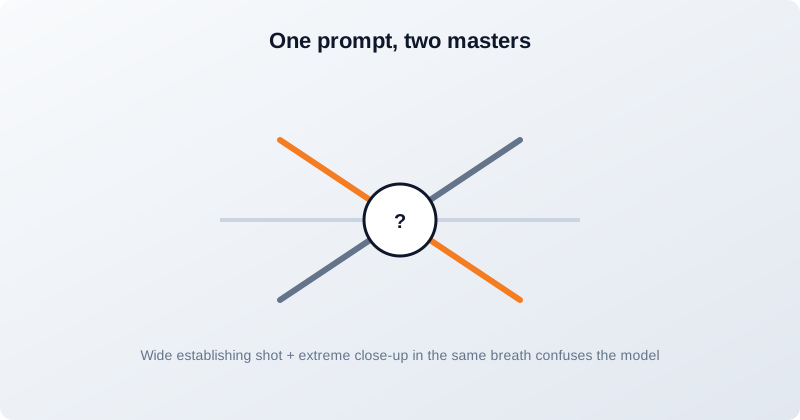
Split incompatible ideas across panels instead of forcing them into one
When I catch myself doing this, I rewrite into beats: establish the room, then punch in on the face, then cut to the hand. Three prompts, three jobs. The storyboard reads like someone actually thought about coverage instead of shouting adjectives into a void.
The Wardrobe Glitch
Character consistency is the part everyone talks about and nobody fully relaxes into. The pitfall isn't forgetting a detail—it's mentioning details that change between panels without noticing. She had a red jacket in the kitchen, a charcoal coat on the street, and somehow both are "true" because you were chasing mood, not continuity.
Keep a short reference block for each recurring character: hair, wardrobe, and one story-relevant prop. Reuse the same wording in every panel where the character appears.
Camera Salad in One Breath
Another trap is camera salad—dolly, whip pan, dutch angle, rack focus, drone rise, all in a single sentence because you watched a reel last night and the vocabulary is still warm. Cinematography is sequential. Motion has cause. When you stack moves, the model picks favorites at random, and your "vision" becomes a lottery.
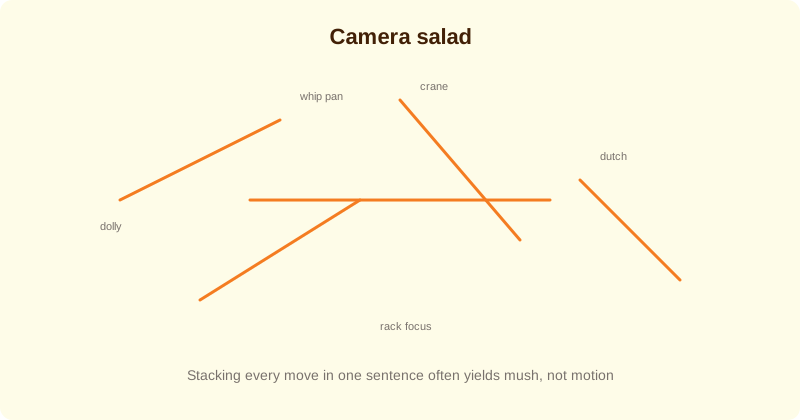
One primary camera decision per panel keeps motion readable
Pick a single primary move, or none. Let the next panel carry the second beat. Storyboards are cheap to duplicate; reshoots are not.
Pretty Words, Empty Room
"Epic," "cinematic," "haunting," "dreamlike"—I use them in conversation. In prompts, they're often empty calories. They don't tell the model what to light, where to stand, or what the character is physically doing. Replace one adjective with an observable fact: rain on glass, fluorescent buzz, a hand hesitating on a door handle.
To be honest, the best prompts read a little like stage directions written by someone who trusts the reader but refuses to be vague. You can still be lyrical; just anchor the lyricism in something a camera can see.
What I Do Before I Generate
Before I touch generate, I run a quick triage—three layers, in order: space and light, subject and action, one camera decision. If I'm feeling fancy, I add atmosphere last, as seasoning, not structure.
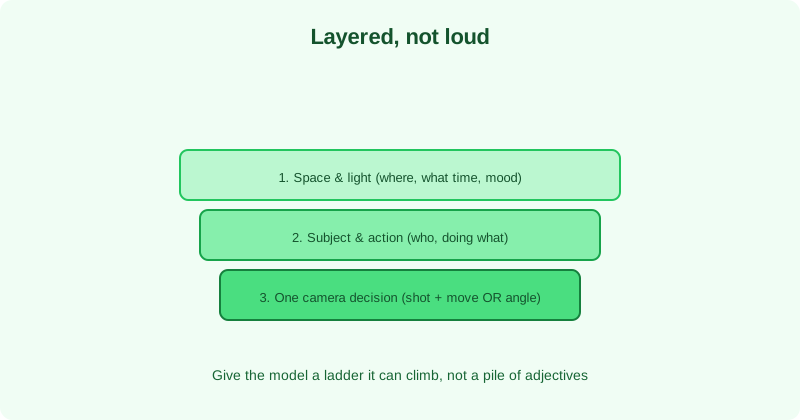
Structure first, flourish second
Read the prompt aloud. If the main action arrives after a long setup, move it forward. Split a panel when the sentence contains two competing compositions or moments.
Try a cleaner prompt in the app
Generate panels from a tight description, adjust, then branch—without paying or signing up.
Open AI StoryboardThe Quiet Reward
The boards won't always obey. That's the tension—fast iteration versus stubborn detail. But when the prompt stops fighting itself, something shifts. Panels start to echo each other on purpose. You spend less time apologizing in the margin notes. The storyboard begins to feel like a plan instead of a mood board.
I'll leave you with the question I ask when a sequence goes sideways: if I could only keep one sentence, which sentence is doing the work? Everything else can wait for the next frame.