There is a harsh truth in the film industry: nobody reads the script until they are already sold on the movie.
You might have the most brilliant screenplay since Pulp Fiction, but if you are standing in a producer's office relying solely on your verbal description, you are fighting an uphill battle. You are asking them to hallucinate a movie in their head, in real-time, while you talk.
The problem is, their version of the movie usually looks cheaper, more boring, and riskier than yours.
This is where AI storyboarding has changed the game. It allows independent filmmakers to walk into a pitch meeting not just with a script, but with a vision.
The Imagination Gap
When you say "dystopian cyberpunk city," an investor might imagine Blade Runner 2049 (high budget, beautiful). Or they might imagine a low-budget TV movie from the 90s (risky, ugly). This difference in imagination is where funding dies.
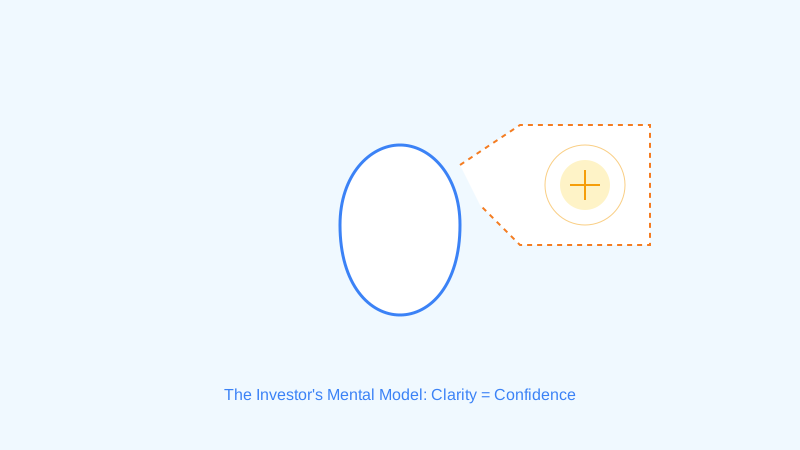
Clarity equals confidence. If they can see it, they can fund it.
Visuals remove this ambiguity. By showing a storyboard frame, you collapse all those infinite possibilities into one concrete reality: "It looks like this."
Building Your Pitch Deck with AI
You don't need to storyboard the entire film for a pitch. In fact, you shouldn't. You need to storyboard the moments that sell the movie.
1. The "Texture" Shots
Create 3-5 frames that establish the world. Is it gritty and desaturated? Neon and slick? Warm and nostalgic? These frames don't even need characters; they need vibe. Use AI to iterate on lighting and color palettes until you find the exact "texture" of your film.
2. The Set Piece
Every movie has that one scene. The inciting incident, the big chase, the emotional climax. Storyboard this sequence in detail. prove you know how to handle the visual geography of a key moment.
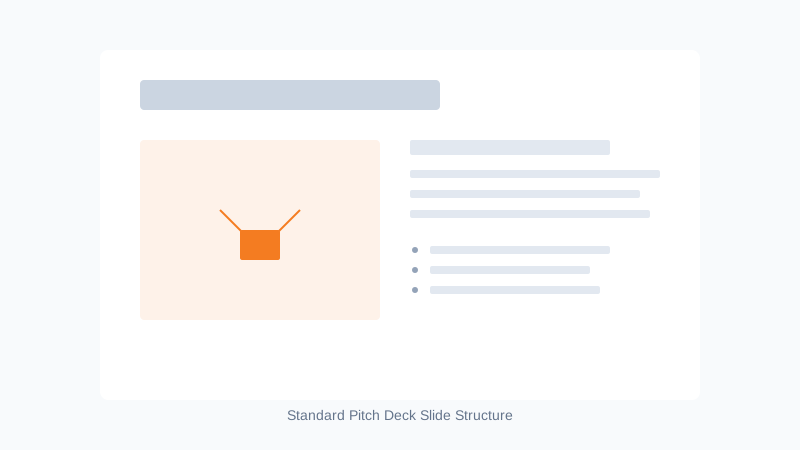
Integrate your storyboards directly into your slide layout, not just as an appendix.
3. The Character Intro
Casting is often hypothetical at the pitch stage. AI allows you to generate a character who feels like the role, without needing to pay a concept artist thousands of dollars or awkwardly Photoshop a famous actor's face onto a stock photo.
The Impact on Conversion
We've spoken to producers who receive dozens of decks a week. The consensus is clear: decks with high-quality custom visuals get read. Text-heavy decks get skimmed.
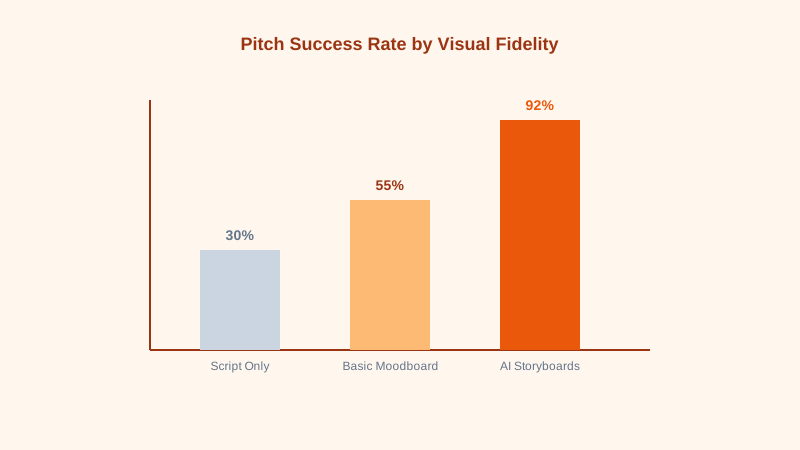
Visual fidelity correlates directly with perceived project maturity.
Common Mistakes to Avoid
- Inconsistent Style: Don't mix photorealistic AI generations with cartoonish ones. Spend time prompting to get a consistent "film stock" look across all images.
- Overloading the Slide: A storyboard frame is detailed. Don't put four of them on a slide with a wall of text. Give the art room to breathe.
- Hiding the AI: Be honest that these are "mood boards" or "visual targets" generated by AI. It shows you are resourceful and tech-savvy.
Conclusion
The barrier to entry for visual storytelling has never been lower. You no longer need to be good at drawing to be good at visual communication. You just need to be clear.
Your job as a director or producer is to make the movie inevitable in the investor's mind. AI storyboards are the fastest way to get there.
Ready to Visualize Your Pitch?
Create professional, consistent storyboard frames for your pitch deck in minutes.
Start Creating for Free