There's this peculiar thing about watching someone scroll through TikTok at 2 AM—their thumb moving like a metronome, skipping past content that cost thousands to produce, pausing on something shot in a kitchen with fluorescent lighting. I've been thinking about this a lot lately: what makes those 15 seconds work? And more importantly, how do you plan for that kind of impact?
The old rules of video production—the ones about three-act structures and character arcs and carefully built tension—they don't exactly apply when your audience decides in half a second whether to keep watching. But here's what's interesting: the creators who consistently break through aren't just throwing things at the wall. They're planning. They're storyboarding. And now, with AI, they're doing it faster than ever.
Let me tell you what I've learned about planning short-form content that actually stops the scroll.
The 15-Second Architecture
Here's the thing about short-form video that nobody likes to admit: it's not actually about being short. It's about being precise. You've got, what, maybe 0.5 seconds before the thumb starts moving again? That means your opening frame isn't just important—it's everything.
I was talking to a creator last week who grew from 200 to 200,000 followers in six months. She showed me her phone, and there were pages of notes. For a 60-second video. She'd planned every beat, every transition, every moment where she needed to do something to keep attention. "I used to just hit record," she told me, "and then I realized I was making content that people finished but didn't remember."
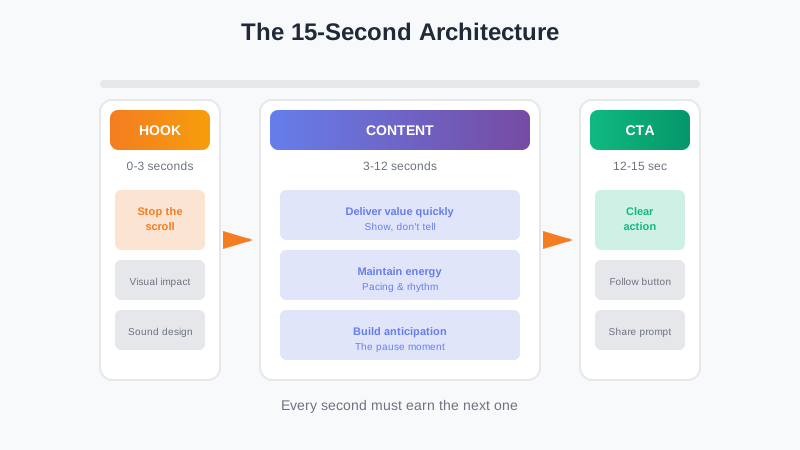
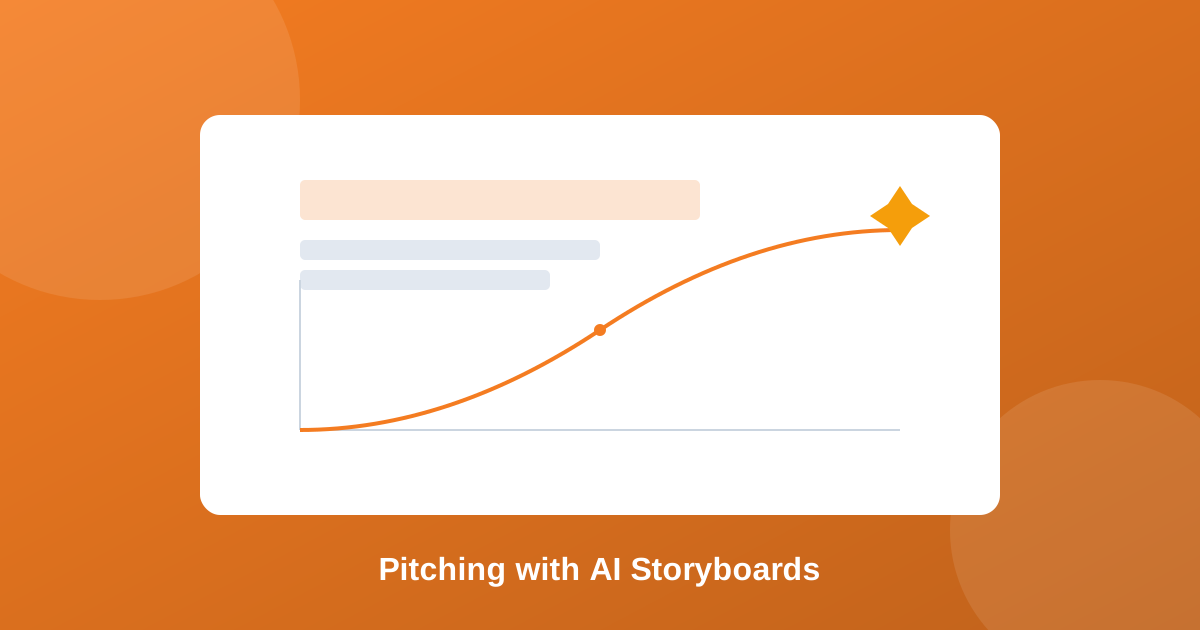
The anatomy of a viral short-form video: precise planning for maximum impact
That's where AI storyboarding changed her process. Instead of spending hours sketching on paper or using complicated design software, she describes what she's thinking and gets back visual options in seconds. Not final art—that's not the point. The point is seeing the rhythm of her content before she films a single frame.
Think about it: if you can see your entire 15-second story laid out as panels, you can spot the boring parts. You can see where the energy drops. You can fix it before you've even picked up your phone.
The Pattern Problem
I've watched hundreds of viral videos, and here's what most people get wrong: they mistake formula for strategy. You know the videos I mean—hook in the first second, unexpected twist at the end, rapid-fire editing. Those things work, sure. But when everyone does them, they stop working.
What AI storyboarding lets you do is experiment with structure without committing to production. You can test three different openings for the same concept and see which one has the most visual energy. You can try a fast-cut sequence against a slow-build reveal and actually see the difference in pacing.
I saw this happen with a beauty creator who was struggling to make tutorials stand out. She storyboarded the same makeup technique five different ways—one focusing on the transformation, one on the mistakes people make, one on the products, two on humor. The transformation video performed 3x better than her usual content. Not because it was better shot, but because the structure served the story.
Planning for the Pause
There's this moment in every great short-form video—this instant where the viewer stops being a passive consumer and leans in. Maybe it's a surprising reveal, or a perfectly timed cut, or just something so unexpectedly honest that it creates this little vacuum in the room.
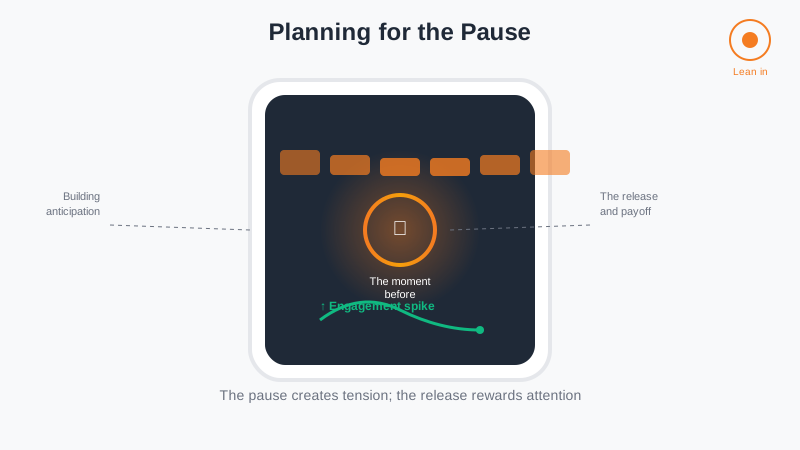
The pause moment: creating instant engagement through planned visual tension
Here's what I've learned: you can't count on those moments happening by accident. You have to plan for them. And AI storyboarding has this weird way of exposing where they're missing.
I remember working with a dance creator who couldn't figure out why some videos went viral while others—technically better executed—fell flat. We storyboarded them side by side, and the difference jumped out immediately: the viral videos all had this moment of anticipation right before the big move. A pause, a look at the camera, some tiny thing that made you hold your breath. The flat ones? Just moved from beginning to end without breathing.
She started planning those breaths. Literally—she'd draw them into her storyboards as "the moment before the moment." And her engagement went up 40% in the first month.
The Tools You Actually Need
Here's the thing about planning short-form content: you don't need fancy equipment or expensive software. You need to be able to see your ideas quickly, iterate on them, and get to filming while the idea is still fresh in your mind.
AI storyboarding tools have become essential for serious creators because they solve the biggest problem in short-form video: speed. The trend cycle on TikTok moves so fast that by the time you've manually sketched a storyboard, the moment might have passed. But with AI? You can go from idea to visual plan in minutes.
The workflow looks like this:
- Capture the idea—whatever fragment of a concept you've got
- Describe it to AI—don't worry about being perfect, just get it down
- Get visual options—AI generates multiple storyboard variations
- Spot the problems—you'll see immediately where it drags or confuses
- Iterate fast—tweak the prompt, try a different angle, test a new opening
- Film with confidence—you know exactly what you're making
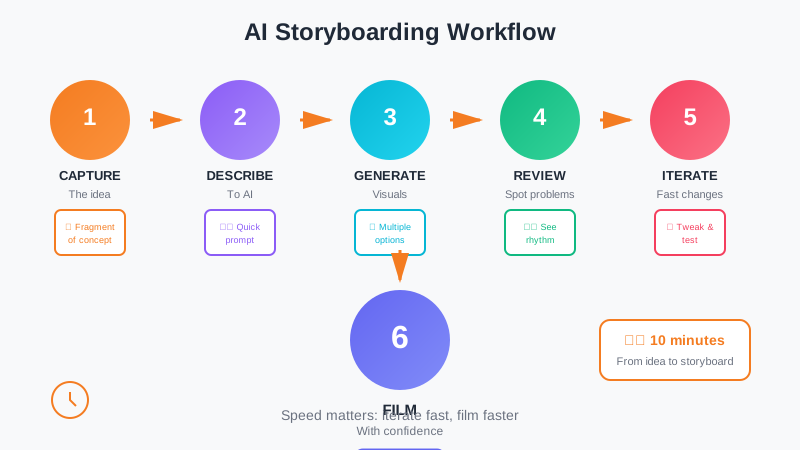
From idea to filmed content in minutes, not hours
I've seen creators cut their planning time from hours to literally minutes while improving the quality of what they produce. That's not a small thing in an ecosystem where being first matters as much as being good.
Platform-Specific Thinking
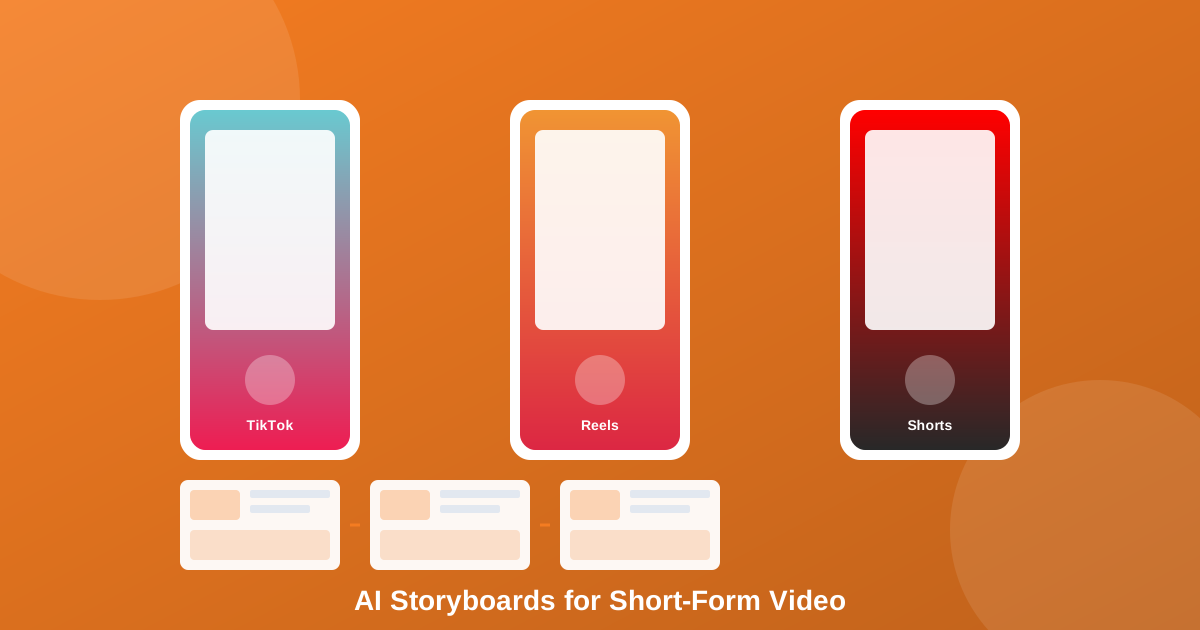
Here's something that doesn't get talked about enough: TikTok, Reels, and Shorts are not the same thing. I mean, obviously they're different platforms, but the expectations are different, the communities are different, and the strategies that work are different too.
AI storyboarding lets you quickly adapt the same core concept for each platform. You create one master storyboard, then generate variations:
- TikTok: Faster pacing, more authentic/raw feeling, sound-driven
- Reels: More polished, aesthetic-focused, slightly longer narrative arc
- Shorts: Search-optimized, tutorial-heavy, clearer value proposition
I worked with a food creator who used to make one video and post it everywhere. Now she storyboards platform-specific versions. Same recipe, three different visual approaches. Her cross-platform growth increased 2.5x because she stopped treating all platforms like they were the same.
The Authenticity Question
Here's the thing that keeps people up at night: if you plan everything, doesn't it feel... manufactured? Doesn't it lose that spark that makes something feel real?
I think about this a lot, and here's my take: planning doesn't kill authenticity—it protects it. When you storyboard, you're not scripting every moment. You're creating space for the real moments to happen inside a structure that works. You're giving yourself permission to be spontaneous on camera because you've already handled the boring stuff—pacing, structure, energy flow.
The creators I've worked with who plan most carefully are also the ones who feel most free in front of the camera. They're not worried about whether the content will work. They've already proven it will. So they can just be.
Getting Started Today
If you're still reading this, you're probably thinking okay, this all sounds good, but how do I actually do it? Here's what I'd suggest:
- Start with your worst-performing recent video—not your best. Storyboard what you should have made. Compare it to what you actually made. You'll learn more from this than anything else.
- Pick one type of content you want to master—tutorials, transformations, humor, whatever. Storyboard five variations of the same concept. See what patterns emerge.
- Time yourself—give yourself 10 minutes from idea to finished storyboard. Speed matters. If you're overthinking, you're doing it wrong.
- Film your storyboard exactly as planned—at least once. See how it feels to execute a plan rather than discover it in the moment.
- Track what happens—not just views, but watch time, comments, shares. Does planning actually improve your results?
The truth is, we're still figuring out short-form video. Nobody's got it all figured out. But the creators who are consistently breaking through? They're not just hoping for the best. They're planning. They're iterating. They're treating 15 seconds like it matters—because it does.
And now, with AI, you don't have to choose between fast and good. You can be both. That's not a small thing in an ecosystem that rewards speed and quality in equal measure.
The question isn't whether AI storyboarding will transform your short-form content. It's whether you'll start using it before your competition does.
Ready to Create Viral Short-Form Content?
Start storyboarding your TikTok, Reels, and Shorts with AI. Plan faster, create better, stop the scroll.
Start Creating Free